

Planning a website or app is exciting. We all know it.
You want to grow your business online. You need a digital presence that works. But then the questions hit: How much will this cost? What am I actually paying for? And finding clear answers in Dubai’s market? Don’t even get started.
These aren’t new questions. They’ve been around forever. But here’s what’s different now: they’re actually getting answered.
Web development cost and app development cost are becoming clearer as the industry matures, the way developers work changes, and the way businesses plan budgets evolves. This isn’t guesswork anymore, it’s happening right now. In 2026, understanding website pricing and what goes into development helps businesses make smart choices, and working with a reliable software development services provider ensures you get quality work at fair rates.
SavTech Digital web and app development services in Dubai have moved from mysterious quotes to transparent pricing. What started as confusing estimates and hidden fees has now grown into clear packages that help businesses plan properly.
In this blog, we’ll break down the real web development cost and app development cost businesses face in 2026.
10 Biggest Cost Factors in Web & App Development
Understanding what affects web development cost and app development cost helps you plan better and avoid surprises. We’ve identified the 10 biggest factors that determine what you’ll pay in 2026.
1. Project Complexity Drives the Biggest Cost Differences
A simple website with five pages costs much less than a full e-commerce platform. An app that just displays information costs less than one with user accounts, payments, and real-time features.
When you plan a project, complexity is the first thing that affects cost. A landing page is simple. An online marketplace is complex. The gap between them is huge.
This is where scope definition matters, and it’s no longer optional. Projects with clear scopes and detailed requirements get accurate quotes faster than vague ideas. The best software development services teams ask detailed questions upfront to understand exactly what you need.
The current state of project scoping looks like this:
- Breaking down features into simple versus complex categories
- Estimating hours needed for each feature separately
- Accounting for integrations with other systems
- Planning for testing and quality assurance time
- Building in buffer for unexpected challenges
2. Design Quality and Customization Level
Using a template design costs less than creating custom designs from scratch. Stock graphics are cheaper than original illustrations and animations.
The biggest factor in design costs is originality. Do you want something that looks like many other sites, or something completely unique to your brand?
Enter custom design work. Custom designs take more time because designers create everything specifically for you. They consider your brand colors, your target audience, and your specific needs. Template sites use pre-made designs that you adjust slightly.
Today’s design tools have made templates look better than ever. Instead of cheap-looking sites, modern templates can look professional. Now, when you hire web developer teams, they can customize templates to look almost custom while saving you money.
By combining smart template use with custom touches where they matter, businesses get great results at reasonable costs.
3. Platform Choice: Web, iOS, Android, or All Three
Building a website alone costs less than building mobile apps. Building for one platform (just iOS or just Android) costs less than building for both.
The platform problem affects everyone. If you only build a website, mobile users might not get the full experience. If you only build for iPhone, Android users can’t access your app.
Technology is solving this with cross-platform development:
- Tools now let developers build once and deploy to both iOS and Android
- Progressive web apps work like mobile apps but run in browsers
- Responsive websites adapt to all screen sizes automatically
- Choosing the right approach based on your audience saves money
4. Features and Functionality Requirements
Basic features like contact forms cost little to add. Complex features like payment processing, user dashboards, and real-time notifications cost more.
Customers don’t just want websites anymore. They want experiences. The list of desired features keeps growing: live chat, video calls, AI assistants, social media integration.
The solution is prioritization. Not every feature needs to be in version one. Smart businesses launch with core features that solve the main problem, then add more features based on user feedback.
This is how smart budgeting for features works:
- Must-have features that the product cannot function without
- Nice-to-have features that improve experience but aren’t critical
- Future features that can wait for version 2 or 3
- When you separate these clearly, you control web development cost better
This is exactly why experienced teams ask about priorities. It’s not limiting your vision. It’s smart budgeting that gets you launched faster. The future of development isn’t about building everything at once; it’s about building smart and adding value over time.
5. Developer Experience and Location
Junior developers charge less per hour than senior developers. Developers in different countries have different rate structures. Dubai-based developers understand local market needs better.
The fundamental question when you hire web developer talent is: do you want cheap or do you want good? The two rarely overlap perfectly.
Here’s how developer costs break down:
- Experience level directly affects both speed and quality
- Local developers cost more but understand Dubai business needs
- Remote teams cost less but may have communication challenges
- Freelancers charge less than agencies but offer less support
- The right choice depends on your project complexity and timeline
6. Timeline and Urgency
Normal timelines cost standard rates. Rush projects cost more because developers work longer hours and push other projects back.
Here’s a hard truth: “We need it yesterday” always costs extra. Developers have schedules and other clients. Jumping the queue costs money.
Rush pricing exists for good reasons. When a team drops everything to focus on your urgent project, they’re saying no to other work. That lost opportunity has value.
The benefits of planning ahead are clear for website pricing:
- Normal schedules let developers work efficiently
- No rush fees mean you pay standard rates
- Better quality because work isn’t stressed and hurried
- More time for testing and refinement
- Realistic timelines usually deliver better final products
For businesses watching budgets, planning ahead makes a real difference. While rushing is sometimes necessary, building in proper timelines saves money and usually improves results.
7. Ongoing Maintenance and Support
Building the website or app is just the start. Hosting, updates, security patches, and bug fixes are ongoing costs. Some teams include initial support free, others charge monthly.
Many businesses forget about post-launch costs and get surprised. Websites need updates. Servers need paying. Security requires attention.
Maintenance costs in software development services include:
- Monthly hosting fees for keeping your site online
- Regular updates to keep software secure and current
- Bug fixes when issues are discovered
- Content updates and changes as your business evolves
- Performance monitoring to keep everything running smooth
The focus is on planning for the full lifecycle, not just the launch, and budgeting for ongoing care keeps your digital products healthy.
8. Integration with Existing Systems
Standalone projects cost less than projects that need to connect to your existing CRM, payment systems, inventory management, or other tools. Each integration adds complexity and time.
Modern businesses don’t use isolated tools anymore. Everything connects. Your website might need to talk to your customer database, your payment processor, your email system, and more.
Integration makes systems powerful but adds development time:
- Connecting to third-party APIs requires testing and configuration
- Data security becomes more critical when systems share information
- Each integration point can introduce bugs that need fixing
- Proper integration saves manual work later but costs more upfront
When you need development that works with your other business tools, integrating platforms improves efficiency check out our web design and development services that work smoothly with existing business systems.
9. Content Creation and Migration
If you provide all content (text, images, videos) ready to use, development costs less. If developers need to create or migrate content from old systems, it adds to app development cost.
Content is often overlooked in budgets. Someone needs to write the words, edit the images, and organize everything. This takes time.
Development teams can handle content, but it costs extra:
- Writing website copy requires skill and time
- Professional photography or custom graphics cost money
- Migrating old content to new systems needs careful work
- Optimizing images and videos for web use takes effort
10. Quality Assurance and Testing
Basic testing to make sure things work costs less than extensive testing across multiple devices, browsers, and scenarios. Security testing adds cost but prevents expensive problems later.
Testing determines whether your product works properly or crashes embarrassingly. Skipping testing to save money usually costs more when problems hit real users.
Proper testing protects your investment:
- Functionality testing ensures all features work as designed
- Cross-browser testing confirms your site works everywhere
- Security testing protects against hackers and data breaches
- Performance testing makes sure your site handles traffic
- User testing validates that real people can actually use your product
Understanding Different Pricing Models
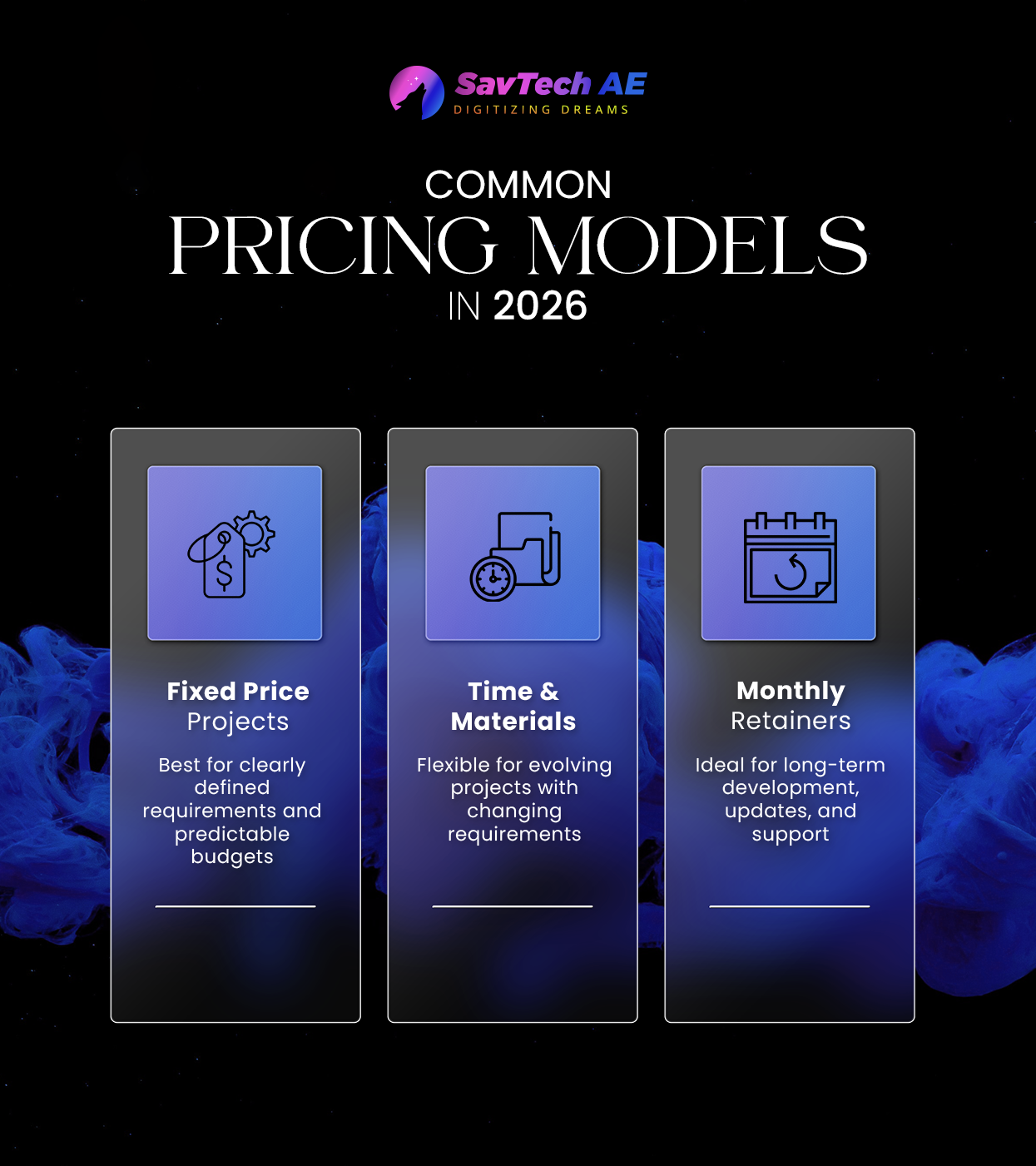
Different development teams use different pricing structures. Understanding these helps you compare quotes fairly and choose what works for your situation.
Fixed Price Projects
You agree on scope and price upfront. Good for well defined projects where requirements are clear. Protects you from cost overruns but requires detailed planning upfront.
This works when you know exactly what you want and can describe it completely. Changes mid-project often cost extra or require new agreements.
Time and Materials
You pay for actual hours worked. Good for projects where requirements might evolve. More flexibility but final cost is less predictable.
This works for complex projects where discovering requirements is part of the process. You pay for what you use but need to monitor progress.
Monthly Retainers
You pay a set amount monthly for ongoing work. Good for long-term relationships and continuous development. Predictable budgeting with dedicated support.
This works when you need regular updates, maintenance, and improvements. The team becomes an extension of your business.
Hidden Costs to Watch For
Beyond the obvious development fees, several costs catch businesses by surprise:
Domain Registration and Renewal – Your web address needs annual renewal. Budget for this every year.
SSL Certificates – Security certificates cost money annually but are essential for trust and Google rankings.
App Store Fees – Apple and Google charge annual fees to list apps in their stores.
Third-Party Services – Payment processors, email services, analytics tools often have monthly fees.
Premium Features – Advanced features in plugins or services usually require paid plans.
Asking about these costs upfront prevents budget surprises later.
How to Get Accurate Cost Estimates
Getting useful quotes requires clear communication. Here’s how to help developers give you accurate estimates:
- Describe your project clearly. The more detail you provide, the more accurate the estimate. Vague descriptions lead to vague quotes.
- Share examples of what you like. Show websites or apps that inspire you. This helps developers understand your vision and estimate appropriately.
- Be honest about your budget. Good teams can often work within budgets by adjusting scope smartly. Hiding your budget wastes everyone’s time.
- Ask what’s included. Does the quote include design, content, testing, training, support? Make sure you’re comparing apples to apples.
- Understand the timeline. Faster doesn’t always mean better. Realistic timelines usually produce better results than rushed work.
Making Smart Budget Decisions
Understanding costs helps you make smart decisions that balance quality and budget:
Start with MVP – Minimum Viable Product launches with core features, proving the concept before investing in every possible feature.
Prioritize features – Build what matters most first. Add nice-to-have features in future updates when budget allows.
Choose the right team – Cheapest isn’t always best. Focus on value: quality work at fair prices with clear communication.
Plan for growth – Build with scalability in mind so adding features later doesn’t require rebuilding everything.
Budget for marketing – The best website or app needs users. Reserve budget for getting people to use what you build.
Partner with SavTech Digital for Transparent Development Pricing
The digital transformation of business requires a partner that provides clear, honest pricing and delivers quality work. If you have any web or app ideas and want to turn them into reality, then we’re here to help. SavTech Digital is a development company focused on building digital solutions that connect businesses and customers without budget surprises.
SavTech Digital brings your vision to life with transparent quotes that break down exactly what you’re paying for. From simple business websites to complex mobile apps, every solution is designed to deliver value and meet your goals.
With a proven record of delivering projects on time and on budget for Dubai businesses, we deliver solutions that increase customer engagement, solve real problems, and drive measurable results.
Schedule a free consultation now!
Conclusion
Understanding web development cost and app development cost in 2026 means looking at multiple factors. From project complexity to developer experience, from platform choices to ongoing maintenance, each element affects your total investment. The key is asking the right questions and working with teams that explain costs clearly.
Whether you need a simple website or a complex mobile app, knowing what drives website pricing helps you budget realistically and avoid surprises. Good software development services teams walk you through costs honestly, helping you make informed decisions that balance quality and budget.
Ready to see how SavTech Digital can help with clear pricing and quality development? Contact us to discuss your web development cost and app development cost needs and get a transparent quote that explains exactly what you’re paying for.