
Planning your budget for a new CRM system feels confusing. Prices jump from cheap monthly plans to expensive custom builds. Some companies pay hundreds of dirhams while others spend thousands every month.
The CRM system cost UAE 2026 depends on many things. Your company size matters. Features you need change the price. Whether you want cloud storage or local servers affects costs too.
This guide breaks down everything in simple terms. You will understand different price ranges. You will learn what affects final costs. You will make smarter decisions about your CRM investment.
From tiny startups in Sharjah to big corporations in Dubai, every business needs the right CRM at the right price. Let us explore actual numbers and honest advice.
Breaking Down CRM Pricing Models
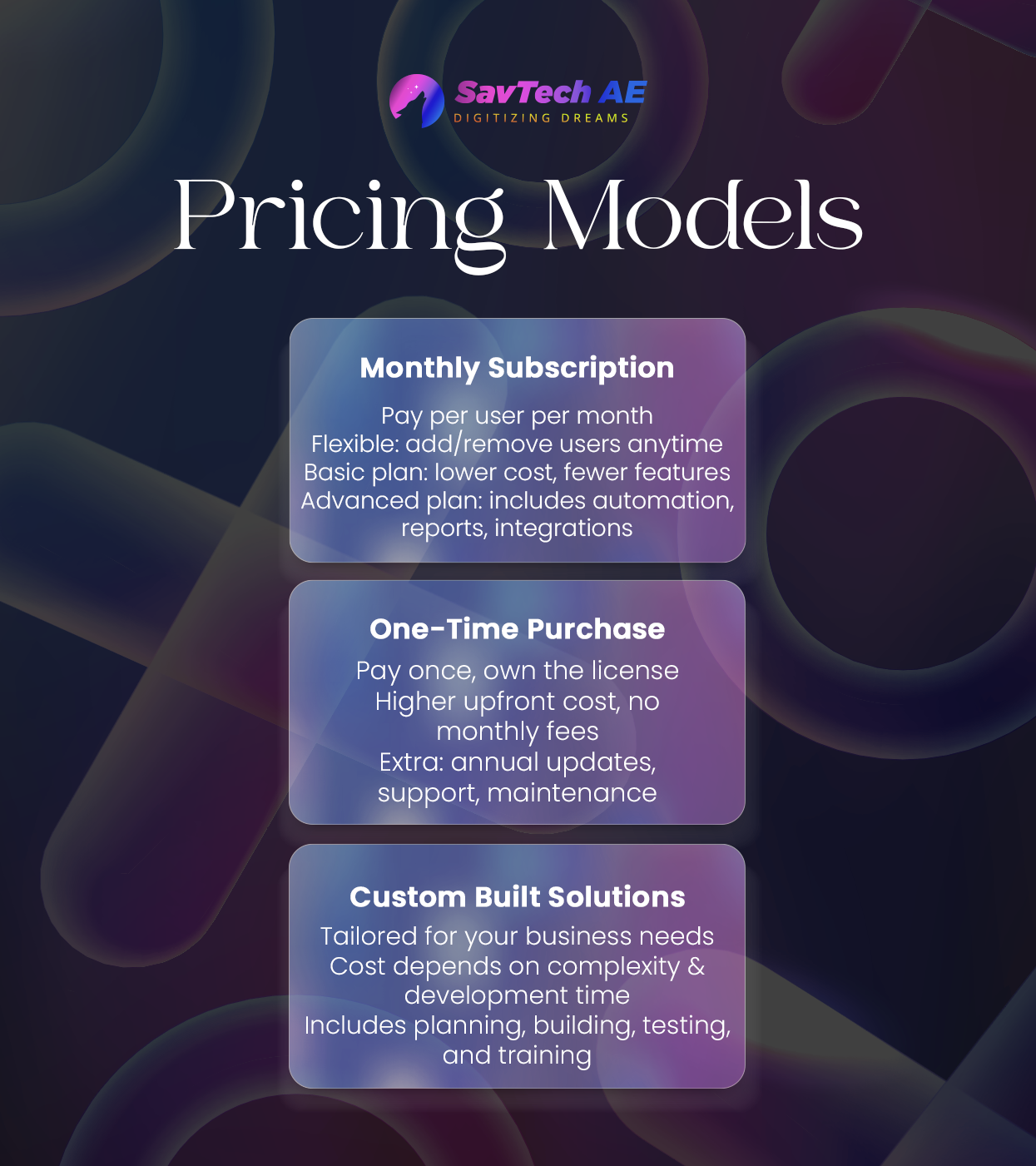
CRM companies charge money in different ways. Some want monthly payments per user. Others ask for one big payment upfront. Understanding these models helps you pick what fits your wallet.
Monthly Subscription Plans
Most CRM systems today work like Netflix or Spotify. You pay every month for each person using the software. This model offers flexibility because you can add or remove users anytime.
Basic plans start cheaper but offer fewer tools. Advanced plans cost more but include automation, reports, and integrations. The monthly model spreads costs over time making it easier on your cash flow.
One-Time Purchase Options
Some businesses prefer buying software outright. You pay once and own the license forever. This option suits companies wanting complete control over their data and servers.
One-time purchases require bigger upfront investment but no monthly bills afterward. However, you still pay separately for yearly updates, technical support, and system maintenance to keep everything running smoothly.
Custom Built Solutions
When ready-made CRM systems do not fit your unique business, custom development becomes necessary. Developers build exactly what you need from scratch. Check out CRM system solutions tailored for your requirements.
Custom CRM projects vary greatly in investment depending on your specific requirements and complexity. Development time typically takes several months including planning, building, testing, and training phases.
What Makes CRM Prices Go Up or Down
Several factors push CRM costs higher or lower. Knowing these helps you budget accurately and avoid surprise expenses later.
Number of Users
More people using your CRM means higher costs. A team of five pays less than a team of fifty. Each additional user adds to your monthly bill.
Some providers offer bulk discounts for large teams. Others charge the same per person regardless of quantity. Always ask about volume pricing when you have many employees.
Features and Capabilities
Basic CRM tracks contacts and deals. Advanced versions include email marketing, sales forecasting, customer service ticketing, and mobile apps. More features equal higher prices.
Automation tools that save time cost extra. Integrations connecting your CRM with other software add to expenses. Decide which features truly matter before paying for unnecessary extras. Explore how AI workflow automation integrates with modern CRM systems.
Storage and Data Limits
CRM systems store customer information, documents, emails, and files. Cheap plans limit storage space. When you exceed limits, providers charge extra fees.
Businesses uploading lots of files need bigger storage packages costing more monthly. Calculate your data needs honestly to avoid paying surprise overage charges.
Support and Training
Basic support means email help during business hours. Premium support includes phone calls, live chat, and emergency assistance anytime. Better support costs more but saves headaches.
Training your team properly requires time and money. Some vendors include free training. Others charge separately for onboarding sessions and educational materials.
Actual Price Ranges for Different Business Sizes
Let us talk real numbers. Here is what businesses across UAE actually spend on CRM systems based on their size and needs.
Small Businesses and Startups
Companies with two to ten employees typically choose basic plans covering essential contact management and deal tracking. These plans offer enough features for growing teams without overwhelming them.
Many startups begin with free versions offering limited features. As they grow and need more capabilities, they upgrade to paid plans. The key is finding balance between features needed and budget available.
Medium-Sized Companies
Businesses employing twenty to one hundred people need advanced features like automation, detailed reports, and multiple integrations. Their CRM requirements are more complex than small businesses.
These companies often customize their CRM with add-ons and extensions. Implementation involves setup costs for proper configuration and data migration from old systems. Learn how CRM improvements connect with business development strategies for better growth.
Large Enterprises
Big organizations with hundreds of users require comprehensive enterprise CRM solutions. These include everything: unlimited users, custom development, dedicated support teams, and complex system integrations.
Initial setup for enterprise systems involves significant investment including customization, extensive training programs, and complete data migration. These investments pay back through massive efficiency gains and stronger customer relationships over time.
Hidden Costs People Forget About
The sticker price never tells the whole story. Several hidden expenses surprise business owners after they commit to a CRM system.
Data Migration
Moving customer information from spreadsheets or old systems into new CRM requires careful planning and execution. The complexity depends on how much data you have and how messy it currently is.
Cleaning messy data before migration adds extra time and effort. Wrong phone numbers, duplicate contacts, and incomplete records need fixing. Proper data preparation ensures smooth transition and accurate information in your new system.
Customization and Development
Standard CRM rarely fits perfectly out of the box. Tweaking fields, creating custom reports, and building unique workflows requires developer expertise and time.
Customization work varies from simple field changes to extensive system modifications. The investment depends on how much you want to tailor the CRM to your specific business processes. Always get detailed quotes before starting customization projects.
Integration Fees
Connecting CRM with accounting software, email platforms, or e-commerce systems requires technical work. Each integration involves development time and testing to ensure everything works together properly.
Some integrations are simple and quick while others take weeks of development. Complexity affects the investment required. Additionally, certain integrations need ongoing monthly fees on top of initial setup costs.
Making Smart Choices About CRM Investment
Spending money wisely on CRM means getting maximum value for every dirham. Follow these tips to avoid waste while getting powerful tools.
Start With Essential Features Only
Do not pay for fancy features you never use. Begin with basic contact management and sales tracking. Add advanced tools later when your team actually needs them.
Many businesses waste money on premium plans filled with unused capabilities. Buy what solves today problems, then upgrade gradually as requirements grow.
Calculate Total Cost of Ownership
Add up everything over three years: monthly fees, setup costs, training, customization, support, and integrations. This total shows true expense, not just advertised price.
Sometimes expensive systems cost less overall because they include everything. Cheap options hide costs in add-ons and services. Compare apples to apples.
Test Before Committing
Most CRM providers offer free trials lasting two weeks to one month. Use this time seriously testing with real data and your actual team.
Try multiple systems before deciding. What works for competitors might frustrate your workers. Hands-on experience reveals whether software fits your workflow naturally.
Why Choose Savtech Digital CRM System
When looking at CRM system cost UAE 2026, value matters more than price alone. Savtech Digital builds CRM solutions giving you exactly what your business needs without paying for useless extras.
Their team understands UAE business culture deeply. They create systems matching local regulations, languages, and customer expectations. Everything works smoothly from day one.
Transparent pricing means no surprise bills later. You get clear quotes covering all costs upfront. Support continues after launch ensuring your team uses the CRM effectively for years.
Planning Your CRM Budget Wisely
Understanding CRM system cost UAE 2026 helps you budget properly and choose wisely. Investment levels vary greatly depending on business size, features needed, and deployment type you select.
Remember to count hidden costs like migration, training, and customization. Calculate total ownership expenses over three years. Start with essential features then expand gradually as needs grow.
Ready to invest in the right CRM for your UAE business? Need accurate pricing for your specific requirements? Contact Savtech Digital today for honest quotes and expert guidance. Explore the Savtech Digital CRM system built perfectly for businesses in Dubai, Abu Dhabi, and across UAE.